Reclaiming Food
The Challenge
Contemporary food systems present themselves as transparent, clean and trustworthy, while the mechanisms behind them often remain concealed. The challenge of Reclaiming Food was to confront this contradiction. How can design respond to the growing distance between consumer and origin, and question the normalisation of systems built on abstraction and disconnection.
The project began from a personal reflection on resistance. What initially surfaced was frustration towards the way food is packaged, marketed and simplified. Supermarkets offer reassurance, yet frequently obscure the labour, extraction and complex chains behind each product. This tension between appearance and reality formed the conceptual foundation of the work.
The Concept
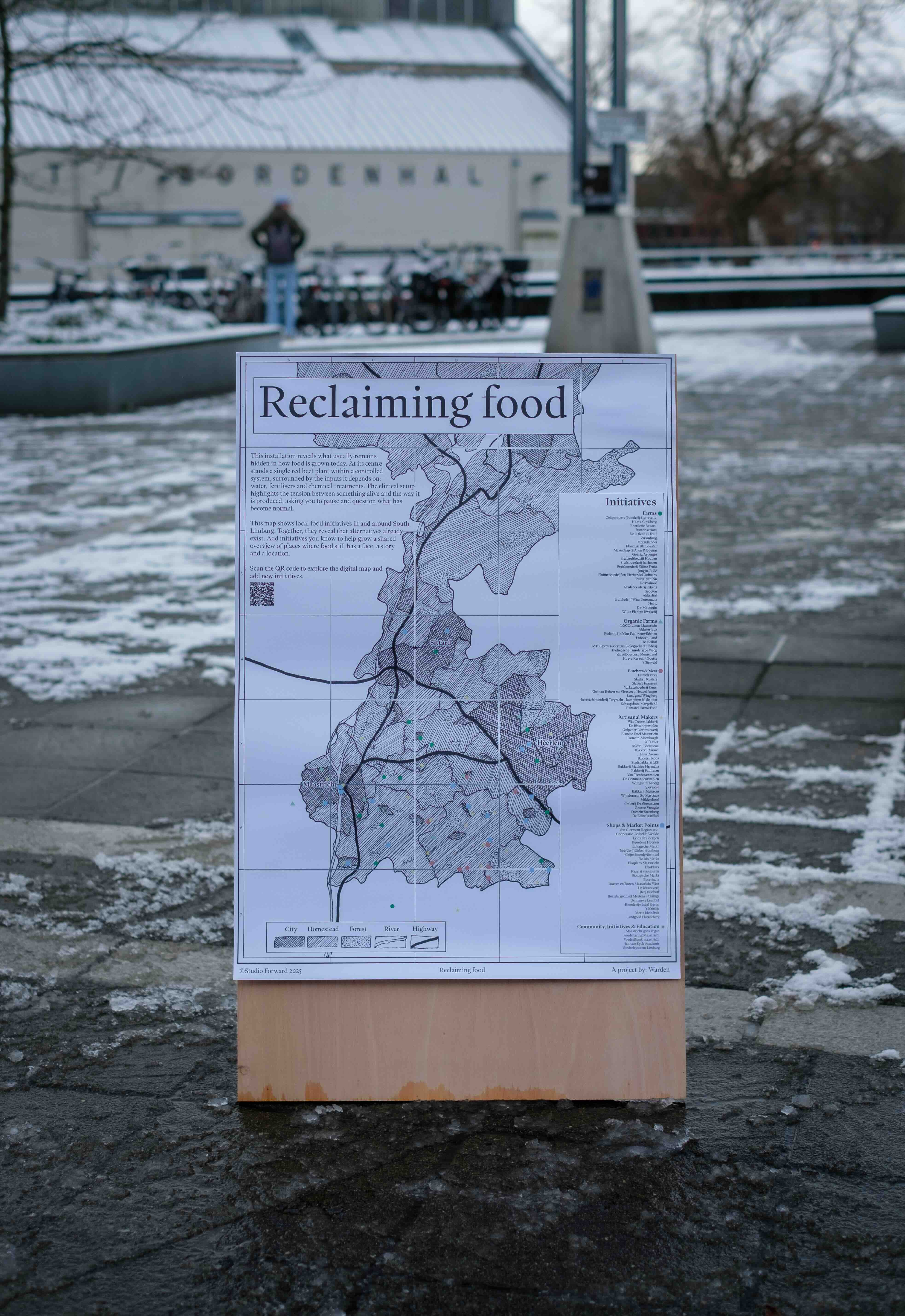
Reclaiming Food was developed through research into alternative food networks. Visits and conversations with local farmers, bakers and cooperatives in South Limburg and surrounding regions revealed models rooted in transparency, trust and seasonal awareness. These encounters reframed food not as a commodity, but as a relationship shaped by time, care and responsibility.
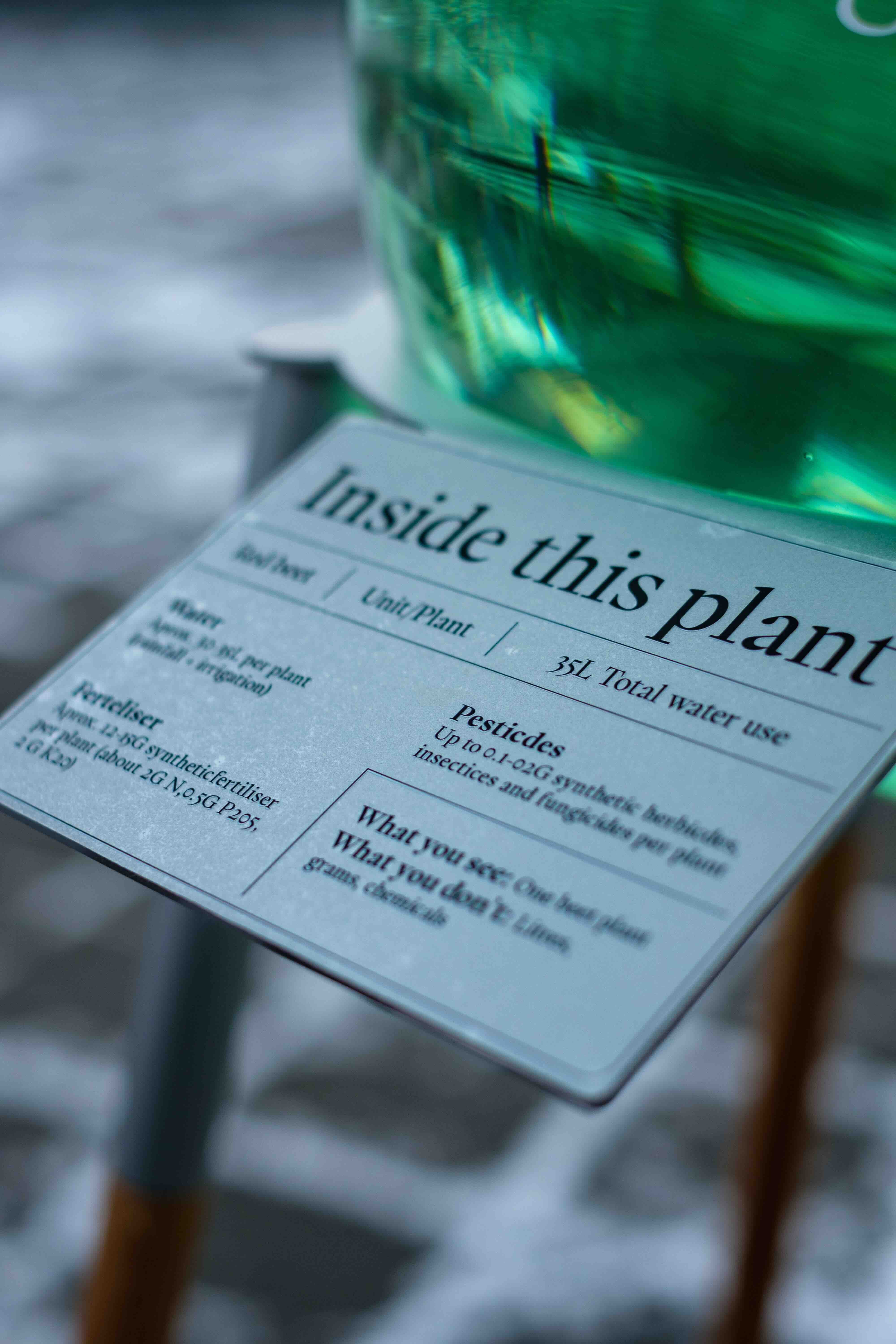
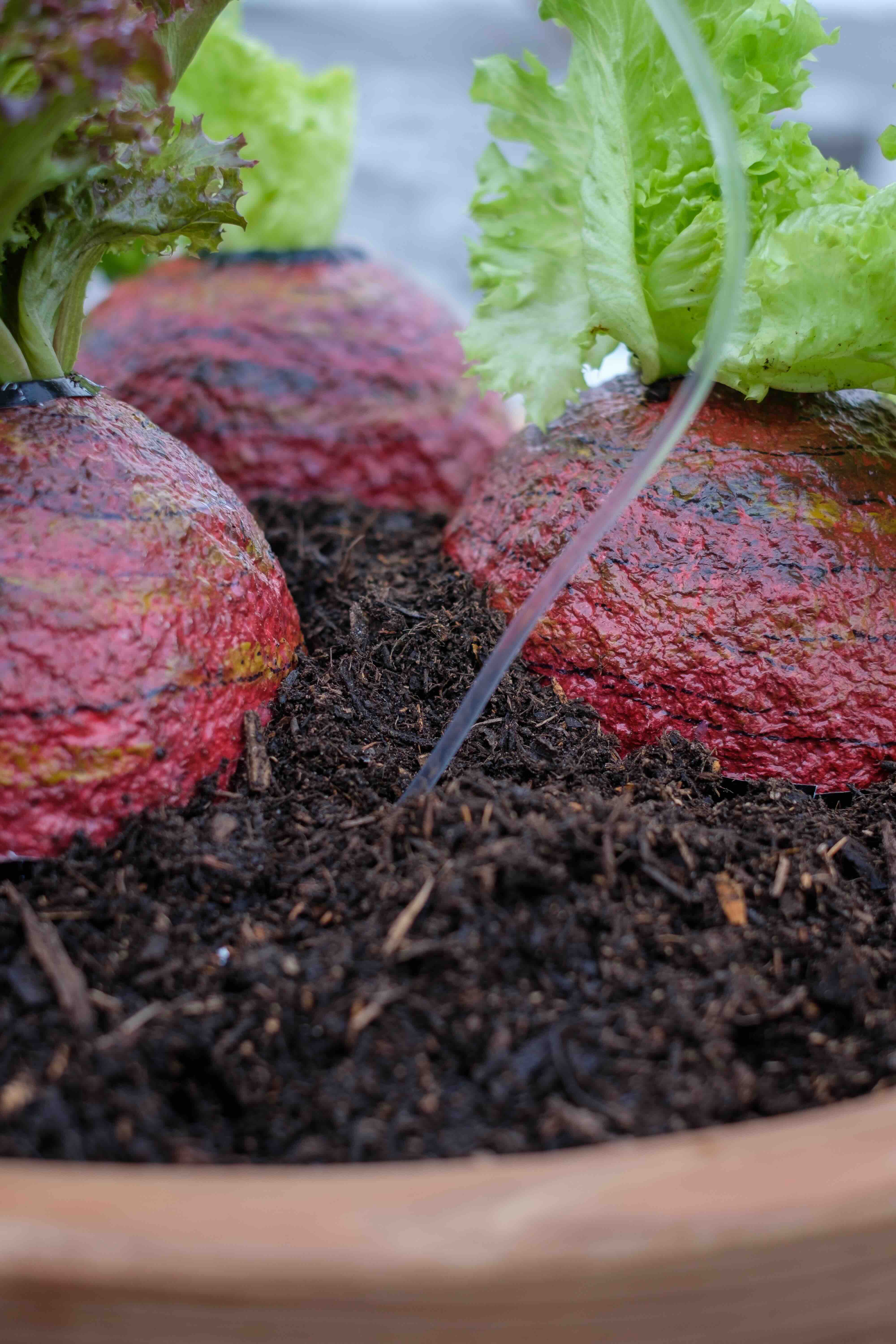
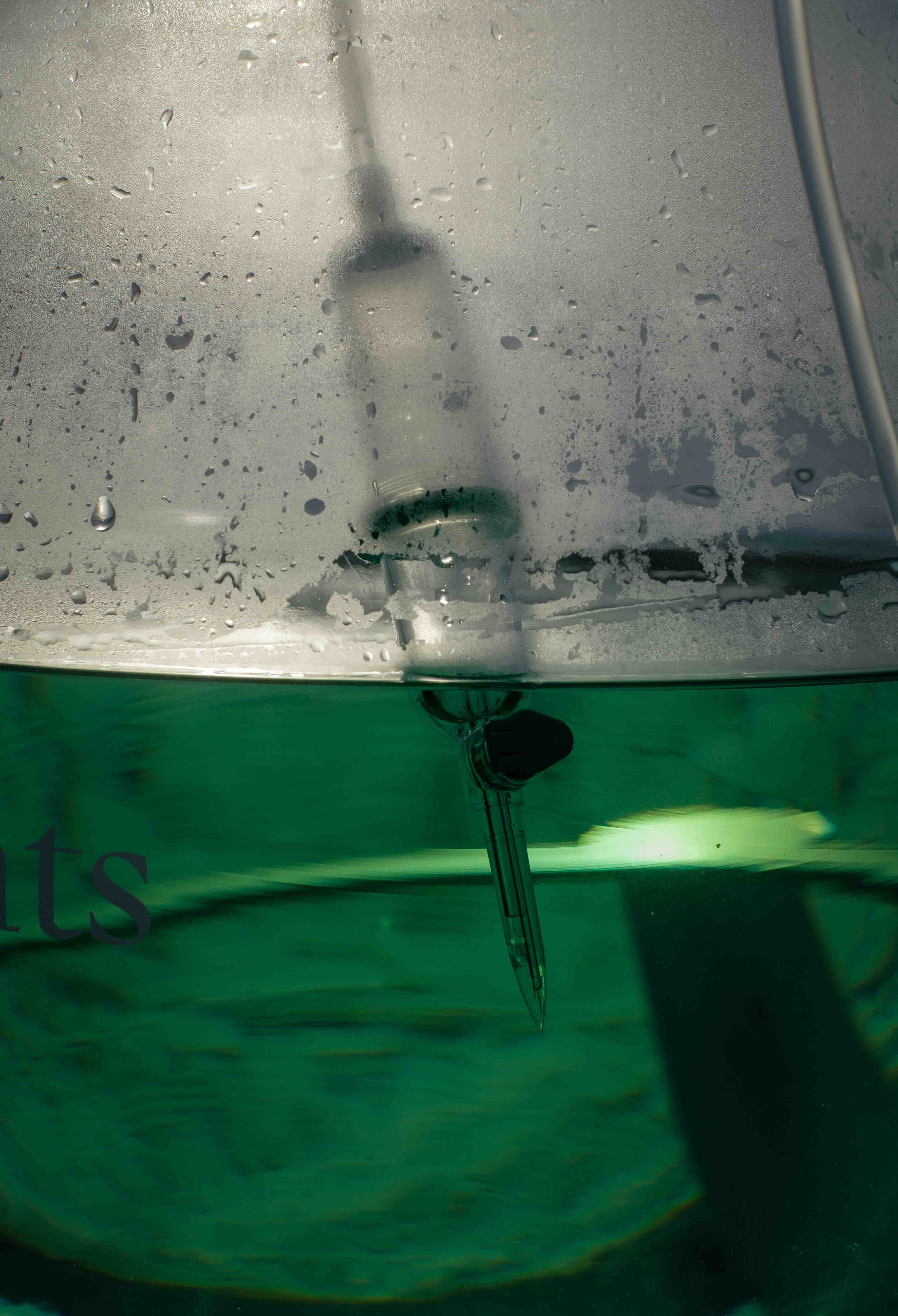
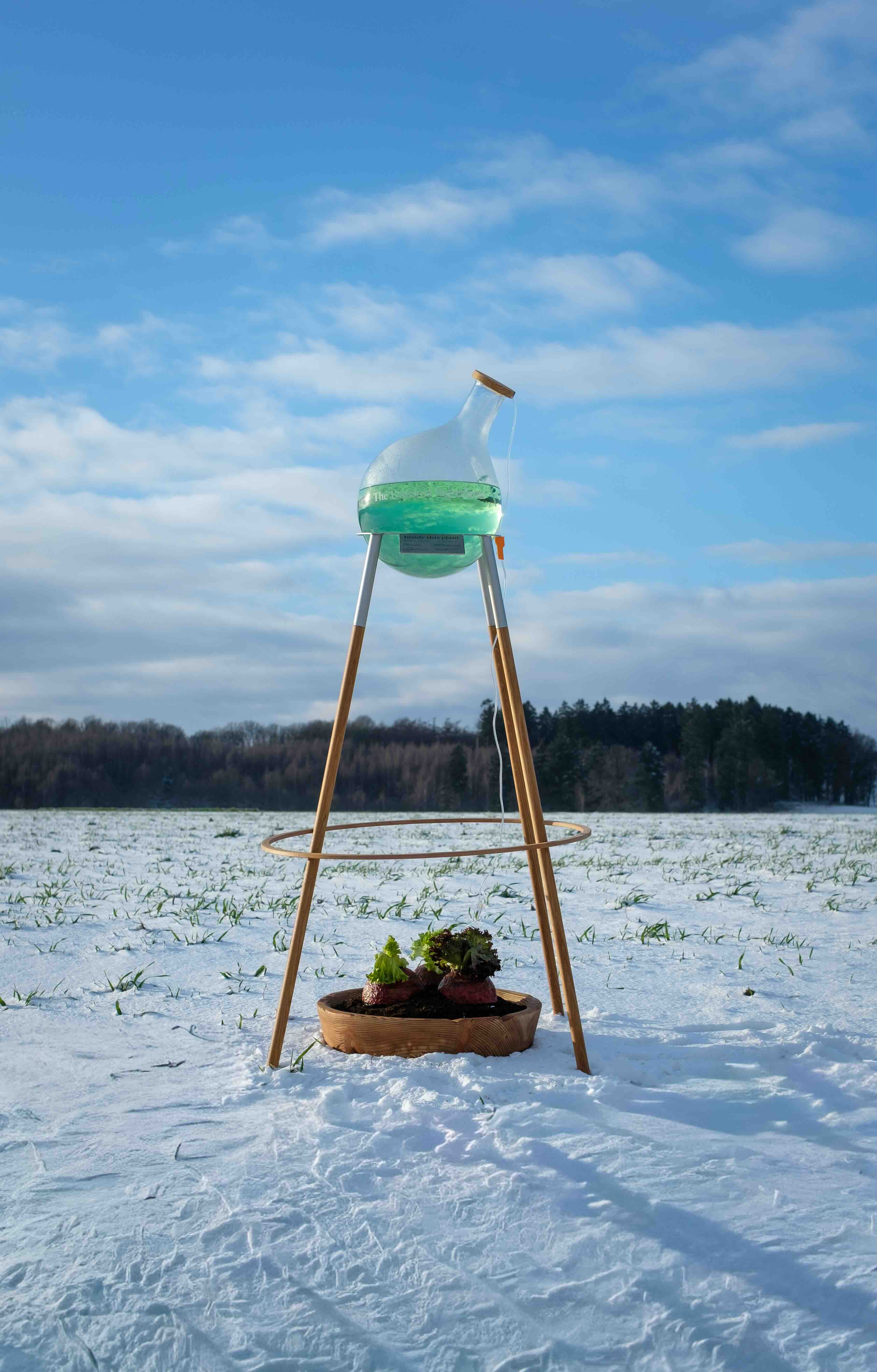
The research was translated into an installation that materialises the hidden systems of industrial food production. One central piece visualises the dominant food structure as an almost organic machine, exposing processes and interventions that typically remain invisible. Rather than offering solutions, the work positions itself as a critical lens, inviting viewers to question how current norms have been constructed and accepted.
The Outcome
Reclaiming Food functions as a spatial act of attention. By making concealed mechanisms visible, the installation encourages critical reflection on everyday consumption. The project does not reject the system outright, but proposes awareness as a form of resistance. Through slowing down and observing more closely, it reopens the possibility of care and reconnection with what sustains us.